

Essential Kitchen Tools for Beginners: What to Buy First
Last Updated: November 22, 2026
Quick Summary
The most useful kitchen tools for beginners are the ones you reach for daily: one good knife, one pan that heats evenly, a pot for pasta, and a few measuring basics. Build your starter kitchen in stages so you spend less while cooking more, and skip the 20-piece sets that fill a drawer without getting used.
- Four cookware pieces cover most everyday cooking: a nonstick frying pan, stainless steel skillet, saucepan, and stockpot or Dutch oven.
- Three knives cover nearly everything: a chef's knife, a paring knife, and a serrated knife.
- Stage 1 in week one covers eggs, pasta, rice, and simple sautés with eight basic items.
- Test any pan with a fridge magnet to check induction compatibility before buying.
- A sharp knife is safer than a dull one because it doesn't slip.
Table of Contents
- The Essential Kitchen Tools List Every Beginner Actually Needs
- Cookware: Frying Pans, Saucepans, and Stockpots
- Knives, Cutting Boards, and Food Preparation Gear
- Bakeware and Measuring Tools for Baking Basics
- A List of Kitchen Essentials for New Home Setups
- Best Essential Kitchen Tools for Beginners on a Staged Buying Plan
- Affordable Kitchen Tools: Budget Tiers and Cost Per Use
- Caring for Your Tools and Knowing When to Replace Them
- Frequently Asked Questions
The Essential Kitchen Tools List Every Beginner Actually Needs
The most useful essential kitchen tools for beginners are the ones you reach for daily, not the ones that fill a drawer. The list stays short: one good knife, one pan that heats evenly, a pot for pasta, and a few measuring basics. Everything else can wait.
A starter kitchen is a small set of cookware, knives, and food preparation tools that covers most everyday meals without duplicates. Build it in stages, and you spend less while cooking more. Below, we show you exactly which tools to buy first, which to skip, and how to keep each one working for years.
USDA food safety guidance on safe kitchen handling
How We Picked These Tools
We picked by frequency of use and cost per use, not by brand name. A tool earns a place on this list if a beginner cook reaches for it several times a week and it holds up to daily washing.
Three filters decided every pick:
- Versatility: one item that does the job of three beats three single-use gadgets.
- Durability: sturdy materials that survive regular stovetop cooking and baking.
- Easy care: dishwasher-safe or simple hand washing, with no fussy parts.
Watch out: the biggest beginner mistake is buying a 20-piece cookware set. Half of it never leaves the cabinet, and the pans you do use are usually the thinnest in the box.
Cookware: Frying Pans, Saucepans, and Stockpots
Cookware is the core of any starter kitchen, and four pieces cover most everyday cooking: a nonstick frying pan, a stainless steel skillet, a saucepan, and a stockpot or Dutch oven. The goal is not a matched set but a small group of pans that each do one job well and overlap as little as possible.
A nonstick frying pan is the friendliest first pan. Eggs release cleanly, cleanup takes seconds, and you need less oil. A 10-inch pan is the most useful size for one or two people; a 12-inch pan feeds three or four and gives you room to stir without spilling. Look for a pan with a thick, flat base, a thin base heats unevenly and warps over time.
A stainless steel skillet gives you the browned crust that nonstick can't. It takes a little practice to learn heat control, preheat the pan, add oil, and wait for the oil to shimmer before adding food, but a stainless skillet will outlast every nonstick pan you own. A 10- to 12-inch skillet with a riveted handle and a heavy base is the workhorse for searing, browning, and building pan sauces.
For saucepans and stockpots, size matters more than material. A 2-quart saucepan handles rice, grains, and sauces for two; a 3-quart saucepan is better if you often cook for a family. A 6- to 8-quart stockpot covers pasta, chili, soup, and batch cooking. A Dutch oven does the work of both a stockpot and a baking dish, which makes it a strong choice for small kitchens that can't store both.
| Cookware piece | Typical size | Best for | Care note |
|---|---|---|---|
| Nonstick frying pan | 10 inch | Eggs, pancakes, fish | Hand wash, no metal utensils |
| Stainless steel skillet | 10-12 inch | Searing, browning, pan sauces | Dishwasher safe |
| Saucepan | 2-3 quart | Rice, grains, sauces | Lid with vent hole |
| Stockpot or Dutch oven | 6-8 quart | Pasta, soup, batch cooking | Heavy base heats evenly |
Induction and Cooktop Compatibility
Induction compatibility is the detail most beginner lists skip, and it is the one that can waste your money fastest. Nonstick and stainless steel pans work on induction only if the base is magnetic. Test any pan with a fridge magnet: if it sticks firmly to the bottom, the pan will heat on an induction cooktop. If the magnet slides off, the pan is aluminum or copper and will not work on induction.
Glass and ceramic cooktops scratch, so lift pans instead of sliding them, and avoid cast iron with a rough bottom on a glass top. Gas burners work with any flat-bottomed pan, though a warped base wastes heat and rocks on the grate. Before you buy any pan, check the manufacturer's compatibility note for your stove type, it is usually printed on the box or the product page.
Watch out: a pan that is not induction-compatible will sit on the burner and never heat.
Knives, Cutting Boards, and Food Preparation Gear
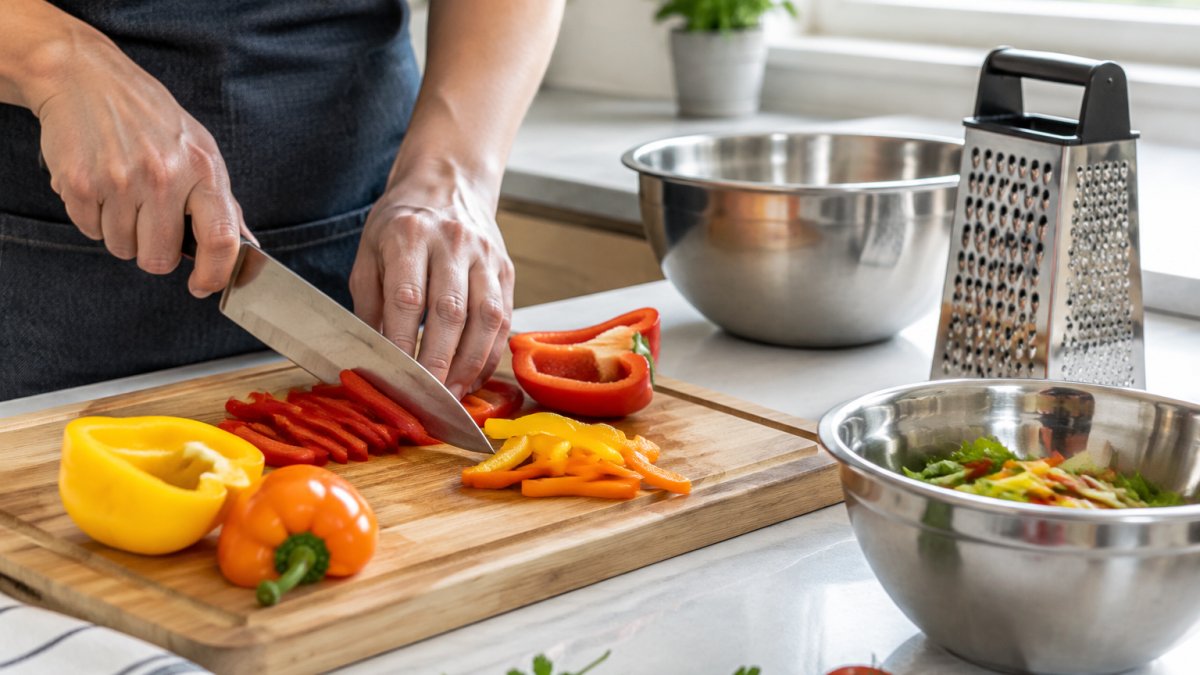
Food preparation gear is where beginners overspend and underuse. You need three knives, one board, and a short list of hand tools. Skip the block sets; buy the pieces you actually hold.
The three knives that cover nearly everything:
- Chef's knife: the workhorse for chopping, slicing, and dicing. An 8-inch blade suits most hands; a 6-inch blade is easier to control if you have smaller hands or a cramped counter.
- Paring knife: small tasks like peeling fruit and trimming vegetables.
- Serrated knife: bread, tomatoes, and anything with a tough skin.
Blade construction matters more than brand. A forged blade, one piece of steel from tip to handle, is heavier and more durable than a stamped blade, which is cut from a sheet of steel and is lighter and less expensive.
Add a cutting board in a size that fits your counter.
A knife sharpener keeps edges working. A honing steel realigns the edge weekly; a sharpener, either a pull-through or a whetstone, removes metal to restore a dull edge every few months.
Kitchen shears snip herbs, open packaging, and cut poultry. A peeler, can opener, colander, and box grater round out the basics. A colander with a stable base and a box grater with at least three sides cover most recipes.
The Vegetable Chopper Kitchen ($13.08) speeds up the chopping step. It is designed to dice and slice vegetables into uniform pieces, and its listing describes easy cleanup.
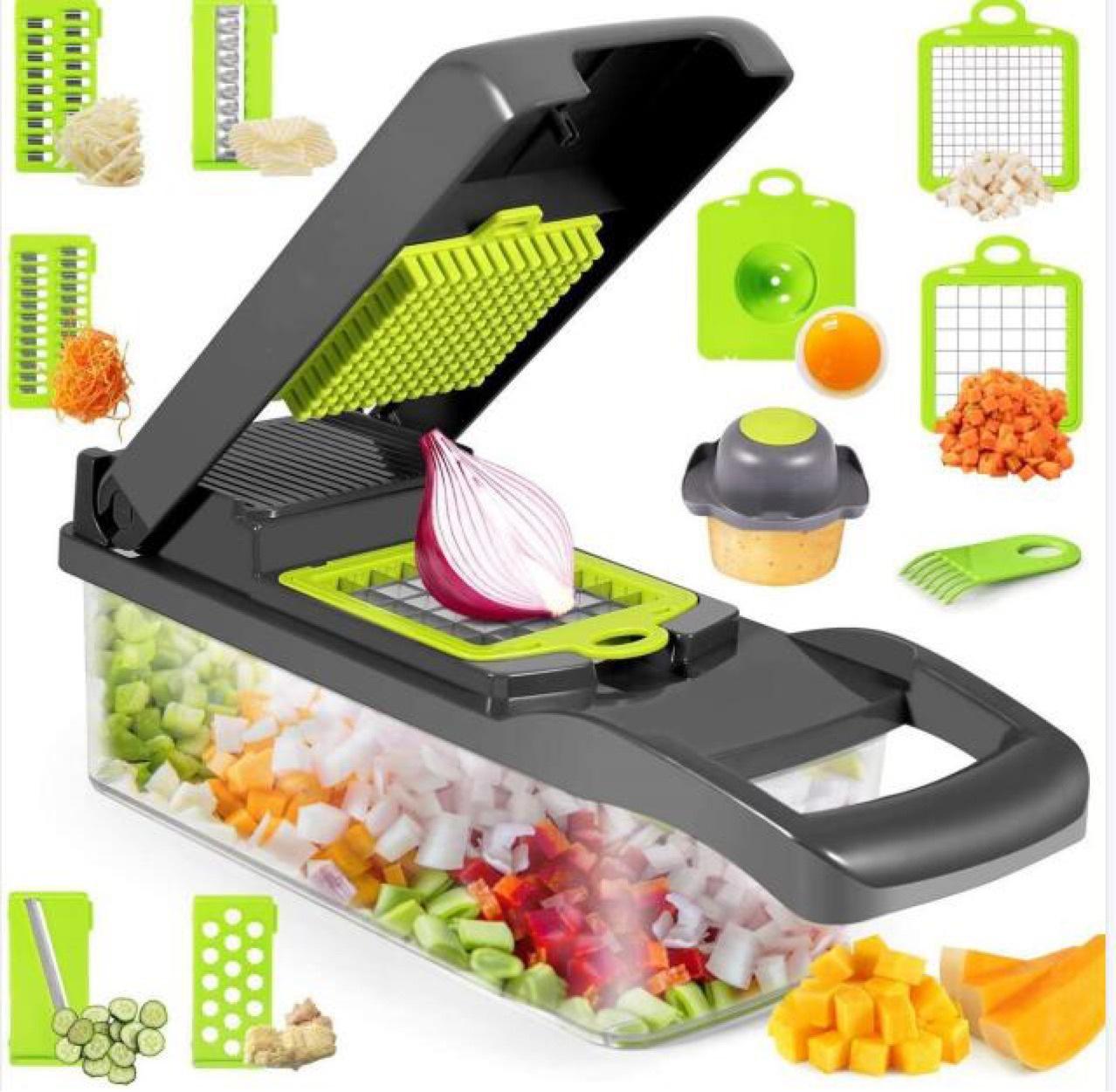
Best for: busy cooks who chop daily and want consistent cuts. Skip if: you prefer the control of a single chef's knife for every task.
Watch out: a dull knife is the most common cause of slips and cuts in a beginner kitchen, so budget for a sharpener from day one rather than replacing knives later.
Bakeware and Measuring Tools for Baking Basics
Baking basics come down to accurate measurement and one good pan. Buy a sheet pan, a baking dish, measuring cups, measuring spoons, and a mixing bowl set, and you can bake most beginner recipes.
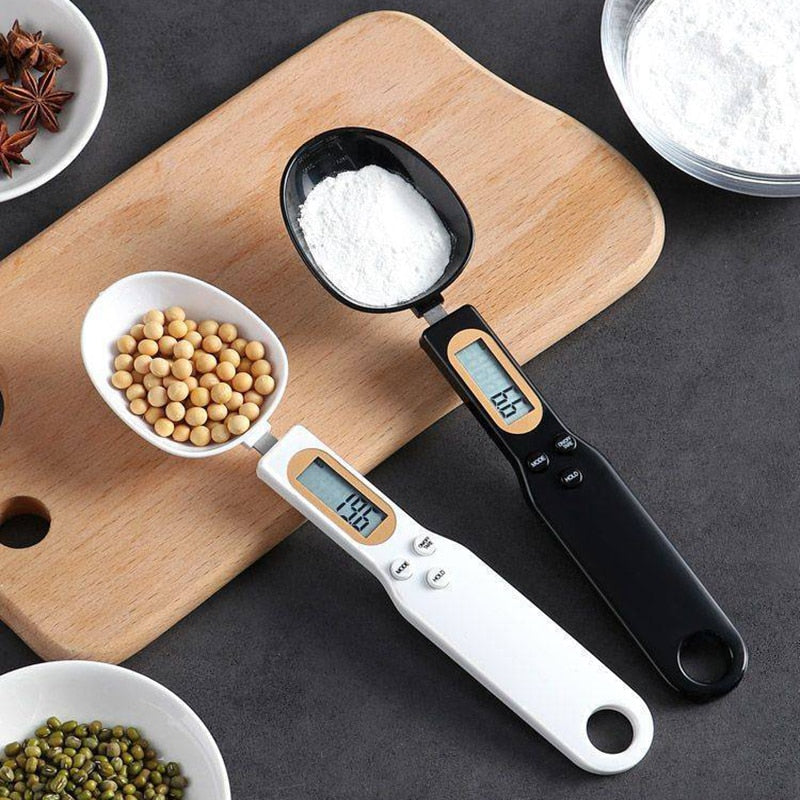
The Digital Measuring Spoon Scale Mini ($10.35) weighs liquids and powdery baking essentials like flour, sugar, and cocoa powder, shows readings on a large LCD screen, switches measurement units, and detaches for cleaning and storage. Its tare function resets the scale between ingredients.
FDA guidance on food measurement and nutrition labeling
For the rest of the bakeware shelf:
- Sheet pan: roasted vegetables, cookies, and sheet-pan dinners.
- Baking dish: casseroles and gratins.
- Mixing bowls: one small, one large, stackable for small kitchens.
- Measuring cups and spoons: dry and liquid sets, kept separate.
You can shop the digital measuring spoon scale if precise weighing sounds like the upgrade your baking needs.
A List of Kitchen Essentials for New Home Setups
A list of kitchen essentials for a new home should cover cooking, prep, and cleanup in one pass. Start with cookware, knives, and measuring tools, then add the small hand tools that make daily cooking flow.
The hand tools that earn their drawer space:
- Wooden spoon and spatula for stirring without scratching.
- Tongs for turning and tossing.
- Whisk for eggs and dressings.
- Ladle for soup.
- Thermometer for safe cooking temperatures.
- Kitchen scale for baking and portioning.
- Oven mitts for safe handling of hot pans.
If you're equipping a first apartment beyond the kitchen, our guide to what tech you really need for a first apartment helps you plan the rest of the setup without overspending.
Watch out: small kitchens and shared housing fill up fast. Measure your cabinet space before buying, and choose stackable mixing bowls and nesting measuring cups over bulky sets.
Best Essential Kitchen Tools for Beginners on a Staged Buying Plan
The best essential kitchen tools for beginners arrive in stages, not one big cart. A staged plan spreads the cost and lets you learn what you actually use before buying more.
Stage 1, week one: chef's knife, paring knife, cutting board, nonstick frying pan, saucepan, wooden spoon, spatula, measuring cups. This covers eggs, pasta, rice, and simple sautés.
Stage 2, month one: serrated knife, stockpot, sheet pan, mixing bowls, colander, tongs, whisk, thermometer.
Stage 3, month two and beyond: stainless steel skillet, Dutch oven, baking dish, kitchen scale, box grater, peeler, kitchen shears, knife sharpener.
This order follows cost per use. The tools you touch every day come first, and the occasional-use items wait until a recipe actually calls for them.
Affordable Kitchen Tools: Budget Tiers and Cost Per Use
Affordable kitchen tools are not the cheapest ones on the shelf; they're the ones that last. Cost per use is the honest measure: divide the price by how many times you'll use the tool in a year.
A pan you use four times a week for three years costs far less per meal than a gadget used twice. Apply that math to every purchase and the budget takes care of itself.
Three tiers to shop by:
- Entry tier: basic nonstick pan, one chef's knife, plastic cutting board, measuring cups.
- Mid tier: stainless steel skillet, sturdy stockpot, wooden board, digital scale.
- Upgrade tier: Dutch oven, quality knife set, glass baking dishes, kitchen scale.
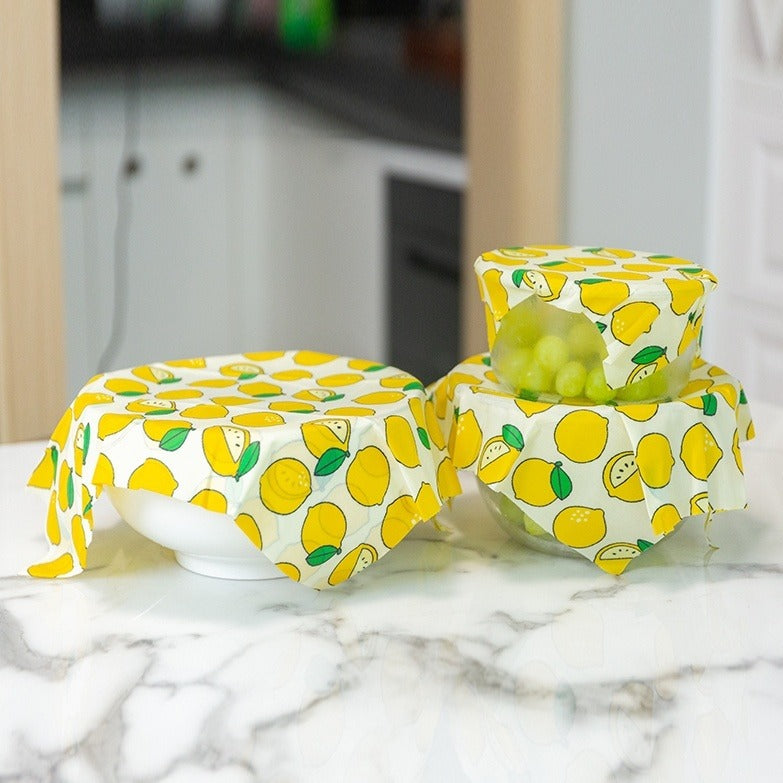
Our catalog keeps the entry and mid tiers affordable. The Cotton Beeswax Fresh-Keeping Cloth ($16.11) is a small example: each package includes three reusable organic cotton and food-grade beeswax cloths that can be used in place of plastic wrap.
EPA information on reducing household waste
Caring for Your Tools and Knowing When to Replace Them
Care and replacement decide whether a starter kitchen lasts five years or fifteen. Most tools fail from neglect, not from heavy use, so a few habits protect your investment.
Knife care: hand wash and dry immediately, store on a magnetic strip or in a block, and hone the edge weekly. A sharp knife is safer than a dull one because it doesn't slip.
Cookware care: never heat an empty nonstick pan on high, and replace it once the coating scratches or flakes. Stainless steel and cast iron can be restored; nonstick cannot.
Cutting board care: wash wooden boards by hand, oil them monthly, and replace any board with deep grooves where bacteria collect.
- Knife slices paper cleanly without tearing
- Nonstick coating is smooth with no flakes
- Pan base sits flat with no wobble
- Wooden utensils show no cracks or splinters
- Cutting board has no deep grooves
For storage and leftovers, the beeswax fresh-keeping cloth is a reusable alternative to plastic wrap.
Building a starter kitchen is a series of small, smart decisions, and the right retailer makes the shopping part simple. Your24/7stop&shop handpicks home and lifestyle products, offers free shipping on standard orders, provides a 30-day easy return policy, and offers 24/7 real human support. Start with the tools you'll use this week, add the rest as recipes demand them, and your kitchen will feel complete long before the drawer does. Get started with Your24/7stop&shop and equip your first kitchen without overspending.
Frequently Asked Questions
Which kitchen tools should a beginner buy first?
Start with the tools you will use every day: an 8-inch chef's knife, one cutting board, a nonstick frying pan, a 2-quart saucepan, a sheet pan, and a set of measuring cups and spoons. Add mixing bowls, a wooden spoon, tongs, and a colander next. This small set covers most stovetop cooking and baking basics, and you can add specialty items like a Dutch oven or stockpot once you know what you actually cook.
How can I build a basic kitchen tool set on a budget?
Buy in stages instead of all at once. Start with knives, a cutting board, and one pan, then add pieces as recipes call for them. A $13.08 vegetable chopper or a $10.35 digital measuring spoon scale from Your24/7stop&shop covers some prep work without a big outlay. Track cost per use. A $20 pan you use four times a week beats a $60 pan that stays in the cabinet.
What kitchen essentials do you need for a new home?
A new home needs cookware (frying pan, saucepan, stockpot), knives and a cutting board, bakeware (sheet pan and baking dish), measuring cups and spoons, mixing bowls, and basic utensils like a spatula, whisk, tongs, and ladle. Add a colander, peeler, can opener, and oven mitts. Small kitchens and shared housing benefit from multipurpose pieces: one Dutch oven can replace a stockpot and a baking dish for many recipes.
Do I need special cookware if I have an induction cooktop?
Yes. Induction cooktops only heat magnetic cookware, so check that pans are labeled induction-compatible before buying. Stainless steel with a magnetic base and cast iron both work, while most aluminum and copper pans do not unless they have a magnetic layer. A quick test: hold a magnet to the pan's base. If it sticks, the pan will work on induction. Check this before you buy, since returns get complicated once a pan is used.
